Workplace injuries can occur in virtually any industry, from healthcare and education to manufacturing, construction, and public service. When an injury happens, employers must navigate a process that involves employees, healthcare providers, claims professionals, and regulatory requirements. This is where Workers Compensation Claims Administration plays a critical role.
Many employers assume workers’ compensation claims involve little more than filing paperwork. In reality, effective claims administration includes injury reporting, claim investigation, medical management, communication, return-to-work coordination, compliance oversight, and ongoing claim monitoring. Each stage can influence employee outcomes, operational efficiency, and overall program performance.
Understanding how the workers’ compensation claims lifecycle works can help employers set expectations, support injured employees, and improve program management.
Have questions about workers’ compensation claims administration? Contact Gulf South Risk Services to learn more about claims management and risk administration services.
What Is Workers Compensation Claims Administration?
Workers Compensation Claims Administration is the process of managing a workers’ compensation claim from the time a workplace injury is reported until the claim is resolved.
The purpose of the process is to ensure that claims are handled efficiently, injured employees receive appropriate benefits and care, and employers maintain compliance with applicable regulations.
Effective Workers Compensation Administration typically includes:
- Claims reporting
- Claim investigation
- Medical management
- Benefits administration
- Communication and documentation
- Return-to-work planning
- Claim resolution and closure
Structured Workers Compensation Claims Management helps employers monitor claim activity while supporting employees throughout the recovery process.
Step 1: Injury Reporting
The first step in the Workers Compensation Claims Process begins when a workplace injury is reported.
What Happens After a Workplace Injury Is Reported?
After an injury occurs:
- The employee reports the injury.
- The employer documents the incident.
- Initial claim information is collected.
- The claim is submitted for review and administration.
Timely reporting is important because it helps preserve information, supports compliance requirements, and allows claims professionals to begin managing the claim promptly.
Documentation often includes:
- Date and time of injury
- Description of the incident
- Witness statements
- Employee information
- Initial medical treatment details
Accurate reporting lays the foundation for effective claim management.
Step 2: Claim Investigation
Once the claim is reported, the investigation process begins.
Claim investigations typically involve:
- Reviewing incident details
- Collecting supporting documentation
- Gathering statements from involved parties
- Evaluating available evidence
- Confirming claim information
The goal of the investigation is to establish a clear understanding of the circumstances surrounding the injury and ensure the claim is administered appropriately.
Investigations are not intended to create obstacles for injured employees. Rather, they help support accurate claim handling and informed decision-making throughout the claims lifecycle.
Step 3: Medical Management
Medical management is often one of the most important components of Workers Compensation Claims Management.
This stage focuses on coordinating and monitoring medical care related to the injury.
Medical management activities may include:
- Treatment coordination
- Communication with healthcare providers
- Monitoring treatment progress
- Reviewing medical updates
- Evaluating recovery milestones
Strong medical management helps ensure injured employees receive appropriate care while keeping employers informed about claim status and anticipated return-to-work timelines.
Because medical expenses often represent a significant portion of workers’ compensation costs, this stage is closely connected to broader Workers Compensation Cost Containment efforts.
Step 4: Ongoing Claims Administration
Many claims remain active for weeks, months, or longer depending on the nature of the injury.
During this period, Claims Administration Services continue to support the claim through:
- Ongoing claim monitoring
- Documentation management
- Benefit administration
- Status updates
- Stakeholder communication
- Compliance oversight
Effective communication between employers, injured employees, healthcare providers, and claims professionals is often essential to maintaining claim progress.
This ongoing oversight is a core component of both Claims Management Services and successful Workers Compensation Program Management.
Step 5: Return-to-Work Coordination
A key objective of many workers’ compensation programs is helping employees safely return to work when medically appropriate.
Return-to-work coordination may include:
- Transitional duty assignments
- Modified work arrangements
- Recovery monitoring
- Communication with healthcare providers
- Coordination between employers and employees
Return-to-work programs often benefit both employers and employees by promoting workplace reintegration and reducing the operational impact of extended absences.
Because every injury is different, return-to-work plans are typically tailored to individual circumstances and medical recommendations.
The Role of a Workers Compensation TPA
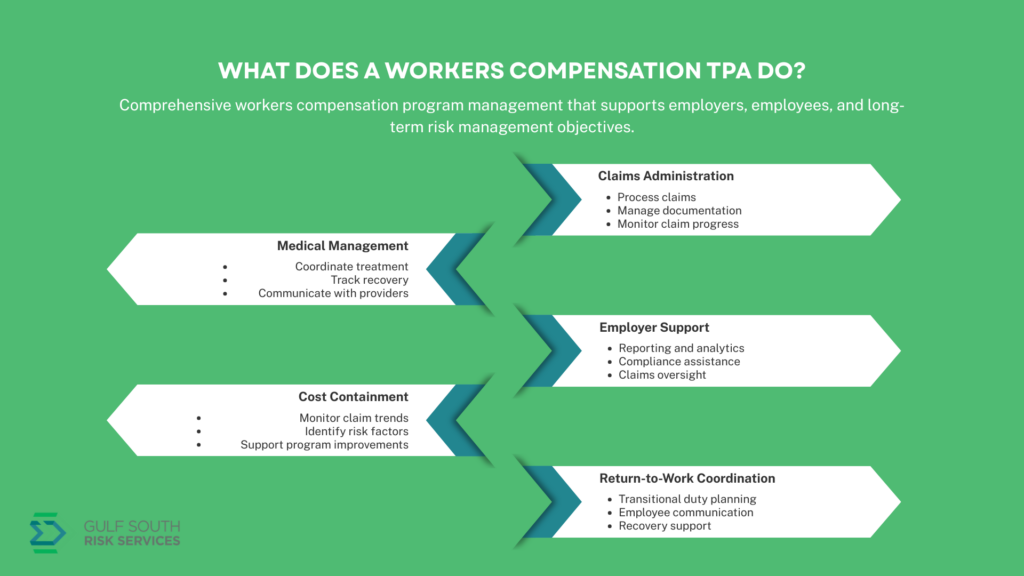
Many organizations partner with a Workers Compensation TPA to assist with the administration and oversight of workplace injury claims.
A Third Party Administrator (TPA) can provide support in several key areas:
- Claims administration
- Claims reporting
- Medical management coordination
- Employer communication
- Employee communication
- Reporting and analytics
- Regulatory compliance support
- Cost containment initiatives
An experienced TPA helps employers manage complex claims while maintaining consistency throughout the claims process.
Common Challenges in Workers Compensation Claims
Even well-managed programs can encounter challenges during the claims lifecycle.
Common examples include:
Delayed Reporting
Late reporting can make investigations more difficult and delay access to appropriate care.
Communication Gaps
Miscommunication between stakeholders may create confusion and slow claim progress.
Extended Absences
Some injuries require longer recovery periods, increasing the complexity of claim management.
Documentation Issues
Incomplete or inaccurate records can create administrative challenges and affect claim timelines.
Complex Claims
Certain Workplace Injury Claims involve multiple medical providers, extended treatment plans, or litigation, requiring additional oversight and coordination.
Understanding these challenges can help employers prepare for more effective claim administration.
How Employers Can Support Effective Claims Management
Employers play an important role in the success of workers’ compensation programs.
Claims Management Checklist
- Encourage prompt injury reporting
- Maintain accurate documentation
- Communicate consistently with employees
- Support return-to-work efforts
- Monitor claim activity and trends
- Promote workplace safety initiatives
- Work closely with claims administration partners
These practices can contribute to more effective Workers Compensation Claims Management and improved program outcomes.
How Claims Data Supports Risk Management
Claims administration is not only about managing individual claims. It also generates valuable information that can support broader Workers Compensation Risk Management efforts.
Claims data may help organizations identify:
- Injury frequency trends
- Common causes of workplace injuries
- High-risk job functions
- Loss patterns
- Return-to-work performance metrics
These insights can support:
- Workplace safety initiatives
- Loss prevention programs
- Program improvements
- Resource allocation decisions
Claims data can provide valuable insights that help organizations identify trends and support future risk management efforts.
Common Misconceptions About Workers Compensation Claims
Claims Administration Is Only Paperwork
Claims administration involves communication, medical management, investigations, reporting, and ongoing oversight—not just forms and documentation.
Claims End After Initial Reporting
Claims often remain active throughout treatment, recovery, return-to-work planning, and resolution.
Employers Have No Role After Filing
Employers continue to play an important role through communication, documentation, and return-to-work coordination.
All Claims Follow the Same Timeline
Every claim is unique. Recovery periods, medical treatment needs, and claim complexity can vary significantly.
What Employers Should Look for in a Claims Administration Partner
When evaluating a claims administration provider, employers may consider several factors.
Important considerations include:
- Industry experience
- Communication practices
- Reporting capabilities
- Claims oversight processes
- Medical management resources
- Knowledge of regulatory requirements
- Risk management expertise
An effective partner should provide the tools, expertise, and support needed to help organizations manage claims consistently and efficiently.
Workers’ compensation claims administration is the process of managing a claim from injury reporting through investigation, treatment, return-to-work coordination, and final resolution.
What happens after a workplace injury is reported?
The claim is documented, reviewed, investigated, and monitored while medical treatment and claim administration activities begin.
What does a workers’ compensation TPA do?
A Workers Compensation TPA helps manage claims administration, communication, reporting, medical management coordination, and compliance support.
How does return-to-work coordination work?
Return-to-work programs help employees transition back to work through modified duties, communication, and recovery planning when medically appropriate.
Why is claims reporting important?
Timely claims reporting supports accurate documentation, efficient claim handling, compliance, and improved communication throughout the claims process.
Conclusion
Workers Compensation Claims Administration involves far more than submitting forms after an injury occurs. The process includes injury reporting, investigation, medical management, ongoing communication, return-to-work planning, and continuous oversight. Each stage contributes to effective claim handling and supports both injured employees and employers.
Understanding the full Workers Compensation Claims Process can help organizations establish realistic expectations, improve communication, and strengthen overall program performance. With the right administrative support and risk management approach, employers can better navigate workplace injury claims while supporting employee recovery and operational goals.
Contact Gulf South Risk Services to learn more about workers’ compensation claims administration, claims management services, and risk management solutions.