Healthcare expenses continue to be one of the largest and fastest-growing costs organizations face. Employers across industries are managing increasing medical expenses, rising prescription drug costs, and evolving employee healthcare needs while trying to maintain competitive benefits programs. As a result, many organizations are evaluating ways to improve oversight, gain greater visibility into healthcare spending, and support long-term plan sustainability.
Effective Cost Containment Strategies for Employee Health Plans focus on more than simply reducing expenses. The goal is to balance financial management, employee access to care, and overall plan performance. Through claims oversight, utilization management, pharmacy review, data analysis, and proactive plan administration, employers can make more informed decisions about healthcare benefits.
This article explores common approaches to Healthcare Cost Containment strategies, the role of plan administration, and how organizations can better understand the factors influencing healthcare spending.
Contact Gulf South Risk Services to learn more about employee health plan administration and cost containment solutions.
What Is Healthcare Cost Containment?
Healthcare Cost Containment refers to the strategies, programs, and administrative processes used to help organizations manage healthcare spending over time while continuing to provide quality employee benefits.
Rather than focusing on a single solution, cost containment typically involves a combination of:
- Claims oversight
- Utilization management
- Case management
- Pharmacy cost review
- Provider network evaluation
- Reporting and analytics
- Ongoing plan monitoring
For many employers, healthcare benefits represent a significant operating expense. As healthcare costs continue to evolve, organizations are placing greater emphasis on long-term benefits planning and informed decision-making.
Why Employee Health Plan Costs Continue to Rise
Understanding the factors contributing to rising Employee Health Plan Costs can help employers evaluate appropriate management strategies.
Several common drivers include:
Increased Healthcare Utilization
As employees access more healthcare services, plan expenses may increase due to higher claim volumes and utilization rates.
Prescription Drug Expenses
Prescription medications, particularly specialty drugs, continue to be a significant contributor to healthcare spending.
Chronic Health Conditions
Conditions such as diabetes, heart disease, and obesity often require ongoing treatment and long-term healthcare resources.
Medical Inflation
Healthcare services, provider costs, and treatment expenses have generally increased over time, affecting both insured and self-funded plans.
These factors reinforce the importance of proactive healthcare planning and ongoing plan oversight.
Claims Data Is the Foundation of Cost Management
One of the most valuable tools available to employers is claims data.
Effective Healthcare Claims Management begins with understanding how healthcare services are being used and where costs are occurring.
Claims reporting can help organizations identify:
- High-cost claim categories
- Utilization trends
- Population health patterns
- Cost drivers
- Emerging healthcare risks
This visibility allows employers to make informed decisions rather than relying on assumptions.
For organizations with Self Funded Health Plans, claims data often provides valuable insights that support more effective planning and management.
Utilization Management Strategies
Utilization management focuses on evaluating healthcare services to help ensure care is appropriate and aligned with established guidelines.
Common utilization management activities may include:
- Reviewing treatment patterns
- Evaluating healthcare utilization trends
- Monitoring high-cost services
- Supporting evidence-based care decisions
The goal is not to limit access to care but to promote appropriate healthcare utilization and improve overall plan management.
Utilization management is often a key component of broader Medical Cost Containment initiatives.
Case Management Programs
Case management programs are designed to support employees with complex or high-cost medical conditions.
Case management may involve:
- Care coordination
- Communication among providers
- Member support and education
- Assistance navigating treatment plans
- Monitoring healthcare progress
Within Health Plan Administration, case management can help improve communication and provide additional support for employees facing significant healthcare challenges.
It also serves as an important component of long-term healthcare management strategies.
Provider Network Optimization
Provider networks play an important role in healthcare plan performance.
Network optimization focuses on evaluating:
- Network access
- Provider participation
- Geographic coverage
- Contracted provider arrangements
- Care delivery efficiency
A well-structured provider network can help improve employee access to care while supporting effective plan administration.
Employers frequently evaluate network performance as part of broader Claims Cost Management and healthcare planning efforts.
Pharmacy Cost Management
Prescription drug spending is an increasingly important part of healthcare cost management.
Key pharmacy-related considerations include:
- Prescription utilization trends
- Specialty medication expenses
- Formulary management
- Pharmacy benefit review
- Ongoing pharmacy reporting
Because pharmacy expenses can represent a substantial portion of healthcare spending, organizations often review both medical and pharmacy claims when evaluating overall plan performance.
Pharmacy oversight is an important component of comprehensive Healthcare Cost Containment strategies.
The Role of a Third Party Administrator in Cost Containment
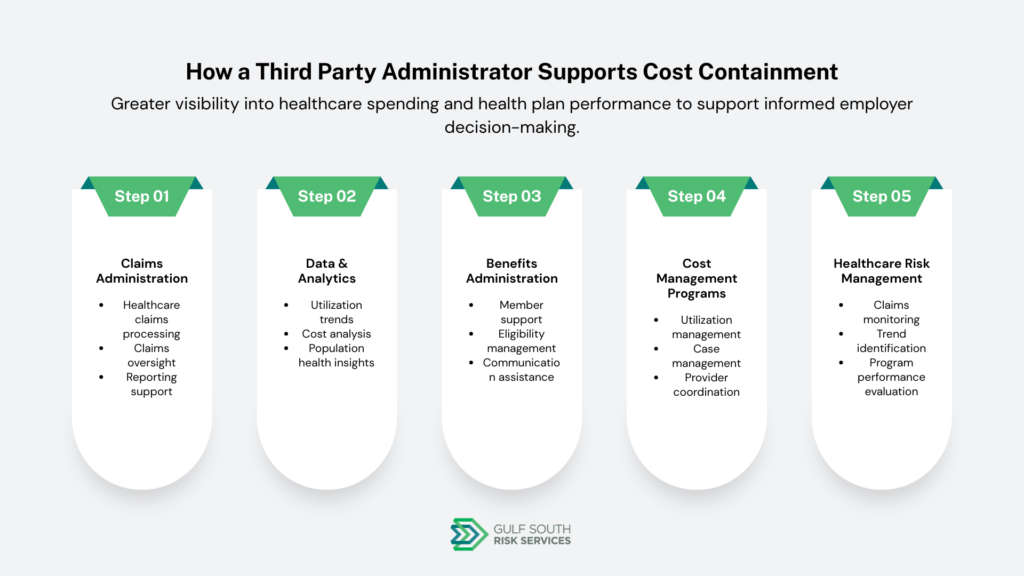
A Third Party Administrator often plays an important role in helping employers monitor and manage healthcare plan performance.
Common TPA support services may include:
- Claims administration
- Reporting and analytics
- Data analysis
- Member support
- Benefits administration
- Cost management program coordination
- Vendor oversight
For organizations utilizing Self Funded Health Plans, TPAs frequently provide the operational expertise needed to support effective plan management.
A knowledgeable TPA can provide employers with greater visibility into claims activity and health plan performance.
Employee Education and Engagement
Employee engagement is often overlooked when discussing healthcare costs, yet it can significantly influence healthcare utilization and plan performance.
Employers may support engagement through:
- Benefits education
- Preventive care awareness
- Healthcare navigation resources
- Clear communication about plan features
- Wellness initiatives
When employees better understand their benefits, they may be more equipped to make informed healthcare decisions.
Employee engagement supports both effective Employee Benefits Administration and long-term plan sustainability.
Common Cost Containment Mistakes Employers Make
Organizations sometimes face challenges because they focus on isolated issues rather than taking a comprehensive approach.
Common mistakes include:
Focusing Only on Short-Term Expenses
Cost containment is an ongoing process that requires long-term planning and monitoring.
Ignoring Claims Data
Without meaningful reporting, it can be difficult to identify trends and opportunities for improvement.
Overlooking Pharmacy Costs
Pharmacy spending can be a major cost driver and should be evaluated alongside medical claims.
Limited Plan Monitoring
Healthcare plans benefit from regular review and performance analysis.
Reactive Rather Than Proactive Management
Organizations that actively monitor trends are often better positioned to address emerging issues.
Questions Employers Should Ask About Their Health Plan
When evaluating healthcare spending, employers should ask:
- Do we understand our claims trends?
- Where are our highest-cost claims occurring?
- How are pharmacy costs impacting the plan?
- Are utilization patterns being monitored?
- What reporting tools are available?
- How effectively are healthcare resources being utilized?
- Are we reviewing both medical and pharmacy claims?
Understanding your health plan data is often the first step toward evaluating cost containment opportunities.
How Self Funded Employers Approach Cost Containment
Employers utilizing Self Funded Health Plans often have greater access to claims information and healthcare utilization data.
This visibility can support:
- Ongoing claims monitoring
- Better reporting and analytics
- Flexible plan design considerations
- Vendor performance evaluation
- Long-term planning initiatives
Many self-funded organizations rely on a combination of Health Plan Administration, Healthcare Risk Management, claims oversight, and administrative support to help manage healthcare spending.
Because self-funded employers retain greater responsibility for healthcare costs, ongoing evaluation and monitoring are often central to their cost containment strategies.
Frequently Asked Questions
What is healthcare cost containment?
Healthcare cost containment refers to strategies and administrative processes used to help employers manage healthcare spending while maintaining employee benefits.
Why are employee health plan costs increasing?
Common factors include increased healthcare utilization, prescription drug spending, chronic health conditions, and medical inflation.
What role does claims data play in cost management?
Claims data helps employers identify utilization trends, cost drivers, and opportunities for informed decision-making.
How does a TPA support cost containment?
A Third Party Administrator may assist with claims administration, reporting, data analysis, member support, and overall plan management.
What are common cost containment strategies?
Common approaches include utilization management, case management, provider network optimization, pharmacy cost review, and ongoing claims monitoring.
Conclusion
Effective Cost Containment Strategies for Employee Health Plans involve much more than reducing expenses. Successful programs balance financial stewardship, employee access to care, and long-term plan sustainability. Through data analysis, proactive administration, utilization management, pharmacy oversight, and ongoing monitoring, employers can gain a better understanding of healthcare spending and make more informed decisions.
Rather than focusing on a single solution, organizations should evaluate healthcare costs holistically and consider how claims management, administration, and employee engagement contribute to overall plan performance.
Contact Gulf South Risk Services to learn more about employee health plan administration, claims management, and healthcare cost containment strategies.