A fully insured health plan is an arrangement in which an employer pays premiums to an insurance carrier that assumes responsibility for covered claims under the policy. Premiums can make budgeting more predictable during the policy term, but renewal rates may change, employees may owe cost sharing, and employer responsibilities remain.
Employers need to know what the premium buys and which decisions remain theirs. For finance and benefits teams, the key is separating the insurer’s contractual claim obligation from the employer’s continuing role in managing the plan.
Key takeaways:
- The insurer bears covered claims risk under the policy, not every health-related expense.
- Premium predictability during a policy term does not guarantee renewal stability.
- Employers retain benefits decisions and applicable administrative obligations.
How does a fully insured health plan work?
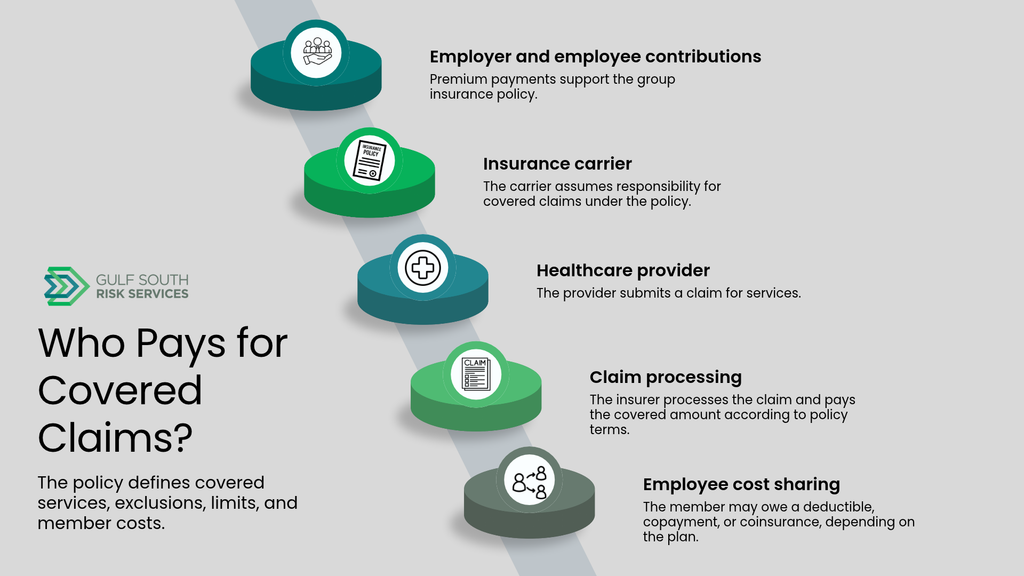
A fully insured health plan is group coverage purchased from an insurance carrier, the insurer that issues the policy. The employer pays premiums, and the carrier assumes responsibility for covered claims under the policy. Employees receive benefits subject to its conditions and exclusions. Terms set limits.
A premium is the coverage payment. The employer may pay or share costs with employees. Employer and employee contributions support coverage; a provider submits a claim, and the insurer processes and pays covered amounts.
In fully insured health insurance, claims administration is separate from risk-bearing. A third-party administrator (TPA) may perform administrative tasks without assuming insurance risk. Read more about insurance carrier and TPA roles.
What do premiums cover, and what can still change?
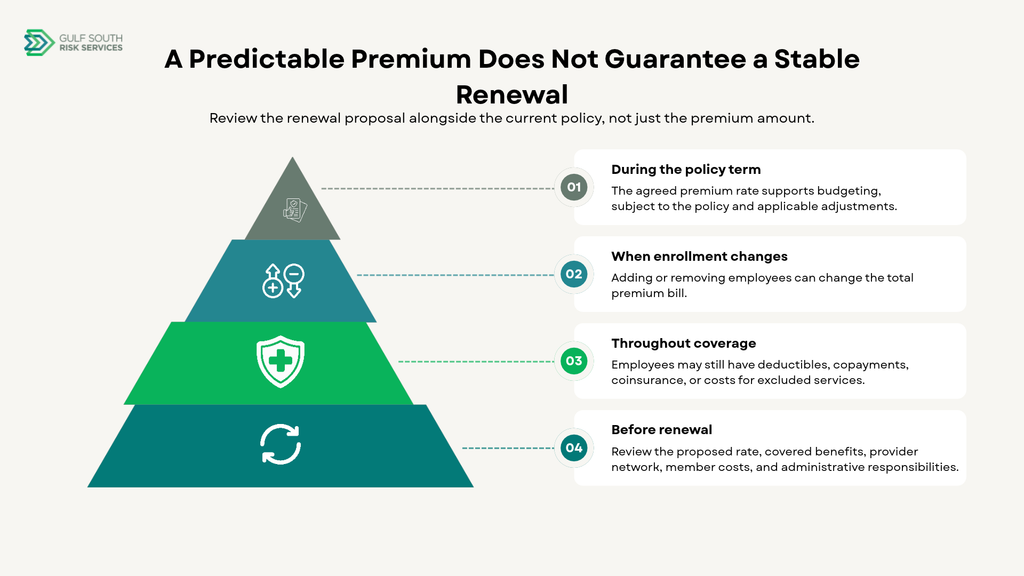
Premiums pay for policy coverage, but not every service or cost is covered. Employee cost sharing may apply, while total employer spending can change with enrollment and permitted adjustments. Renewal pricing is also subject to review. Market rules also matter.
A deductible is what a member pays before the plan pays for covered services subject to it. A copayment is a charge; coinsurance is a percentage of cost. The Summary of Benefits and Coverage explains the rules.
Adding an employee can increase the bill even if tier rates stay the same. Policy-term rates support budgeting but do not promise an unchanged bill or rate. See employer health plan cost considerations.
What are the main benefits and trade-offs?
A fully insured arrangement transfers covered claims responsibility to the carrier under the policy and can make payments easier to budget during the policy term. However, premiums can change at renewal, policy terms define coverage, and employers and employees may pay costs beyond the premium.
| Feature | Practical benefit | Qualification |
| Covered claims risk | Carrier pays claims | Policy exclusions and limits apply |
| Policy-term premium rates | Helps budgeting | Enrollment or renewal can change costs |
| Policy and reporting options | Established coverage structure | Options and reporting vary by carrier |
These vary by policy. Review the contract and reporting. Customization and information access vary by carrier.
Which responsibilities remain with the employer?
Insurance transfers covered claims risk, not every plan-sponsor task. Employers still make decisions about benefits and contributions and may retain administrative duties under the plan and applicable law. Specific duties depend on the plan, employer, contracts, legal framework, and applicable jurisdiction.
Employers need accurate enrollment information, clear employee communications, and a process for required notices. Record each assigned responsibility clearly. Ask who sends each notice and who checks that an employee’s coverage election reaches the carrier.
ERISA applies to many private-sector plans, but not governmental plans or certain church plans. Fiduciary status depends on functions and discretion. Employers may need to monitor providers. See the Department of Labor’s group health plan fiduciary guidance.
What should employers review before renewing coverage?
Before renewal, review the proposed premium, enrollment assumptions, policy terms, member access, contribution decisions, and administrative responsibilities. Compare the proposal with current coverage to identify changes before renewal. Also check network access, employee cost sharing, and ongoing plan administration responsibilities.
Check exclusions, provider network, prescription coverage, cost sharing, and renewal deadlines. A provider network lists participating doctors, hospitals, and other providers. Confirm employees can access expected providers.
A similar premium can still involve different member costs or covered options. Ask the carrier or broker to explain changes and deadlines in writing. For a broader fully insured vs self funded comparison, compare self-funded and fully insured health plans. This article focuses on insured coverage mechanics, not a recommendation to change funding arrangements.
What other questions do employers ask about insured coverage?
The fully insured meaning is about who bears covered claims risk, not whether every expense is covered or employer duties disappear. Unused premiums are not automatically returned. Group coverage uses different funding arrangements; separate providers may handle plan administration independently.
Does fully insured mean employees have no out-of-pocket costs?
No. Employees may owe deductibles, copayments, or coinsurance, and may pay for excluded services.
Does the employer get unused premium dollars back?
No. Lower claims do not automatically entitle employers to refunds. Rebates depend on policy terms and law. Medical loss ratio rebates may need to benefit plan participants.
Is all employer group health insurance fully insured?
No. Employer group health insurance may be fully insured or use another arrangement, including self-funding. Funding determines who bears covered claims risk; the carrier or a separate provider may handle administration.
What should employers do next?
A fully insured health plan transfers covered claims risk to the carrier, but employers must still review policy limits, member costs, renewal changes, and their responsibilities. A predictable premium is not a guarantee of stable future spending.
Employers and brokers should confirm who handles enrollment, communications, and administration. Gulf South Risk Services is an independent third-party administrator. To discuss health plan administration needs, contact the team about its documented administrative services. Employers should bring their policy, renewal proposal, and questions about service responsibilities to that discussion before making informed renewal decisions with their advisers.