Choosing the right third-party administrator requires evaluating more than pricing. The best TPA should align with your organization’s goals while providing strong claims administration, responsive service, flexible technology, reliable reporting, and support for employees and brokers.
A third-party administrator plays an important role in the daily operation of employer benefits programs, including self-funded health plans, employee benefits administration, and workers’ compensation programs. The right administrative partner can influence how efficiently claims are handled, how employees receive support, and how employers understand their plan performance.
When choosing a TPA, employers and benefits brokers should evaluate experience, communication, technology, vendor flexibility, and long-term partnership potential. This guide explains the key factors to consider when comparing TPAs and selecting an administrator that fits your organization’s needs.
Why Choosing the Right TPA Matters
A TPA is more than a company that processes claims. A strong administrative partner becomes an extension of an employer’s team by supporting daily operations, coordinating vendors, providing reporting, and helping employees navigate complex benefit programs.
For employers with a self-funded health plan, the TPA often manages essential administrative functions, including:
- Claims processing
- Eligibility management
- Employee benefits administration
- Healthcare reporting
- Member support
- Vendor coordination
- Benefits administration
- Plan communications
The quality of administration can directly affect the employee experience. Clear communication, accurate claims handling, and accessible member services can help employees better understand and use their benefits.
A TPA also influences the relationship between employers and benefits brokers. Strong broker partnerships rely on transparent communication, reliable reporting, and an administrator that supports the broker’s role in helping clients manage their benefit programs.
For organizations managing workers’ compensation programs, the right partner can also support workers’ compensation administration, claims oversight, risk management, and communication between employers and injured employees.
While cost is an important consideration, selecting a TPA based only on price can overlook factors that impact long-term performance. A lower administrative fee does not always reflect the overall value of service, technology, expertise, and support.
An experienced independent TPA, such as Gulf South Risk Services, focuses on customized administration, flexible vendor relationships, and long-term client partnerships rather than a one-size-fits-all approach.
The right TPA should be viewed as a strategic partner that supports employees, employers, brokers, and long-term program goals.
Understand Your Organization’s Needs Before Comparing TPAs
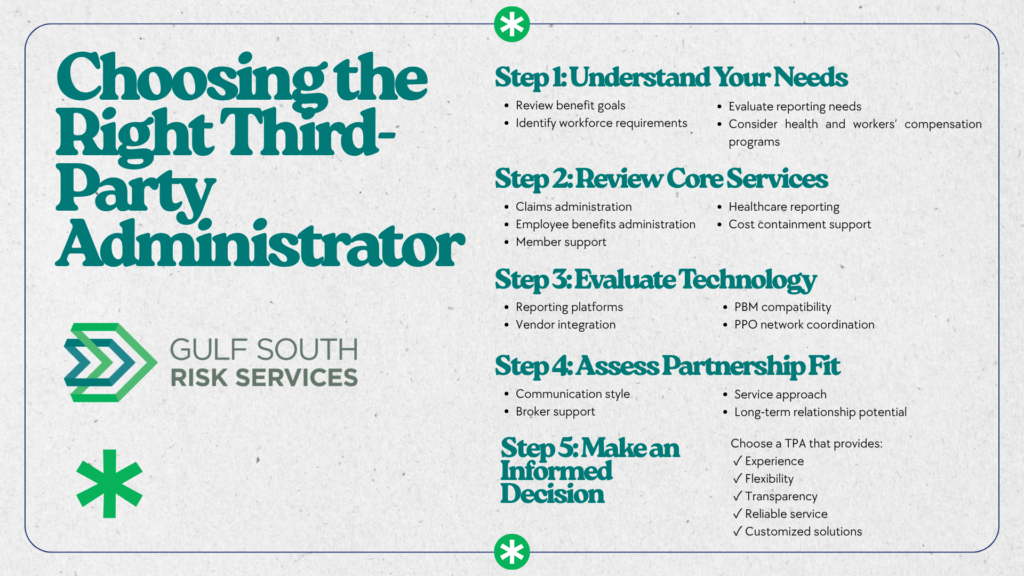
Before comparing administrators, employers should first understand their own objectives. The best TPA depends on the organization’s size, workforce, benefit structure, reporting needs, and operational priorities.
Key factors to evaluate include:
Company Size and Workforce Demographics
Different organizations have different administrative requirements. A growing employer may need scalable systems, while a municipality, school district, or healthcare organization may require specialized reporting and compliance support.
Workforce characteristics can also influence benefit needs. Employers should consider:
- Employee demographics
- Healthcare utilization patterns
- Geographic locations
- Workforce growth expectations
- Employee communication needs
Benefit Program Goals
Employers should identify what they want their benefit program to achieve. Goals may include:
- Improving member experience
- Increasing reporting visibility
- Supporting healthcare cost containment
- Expanding vendor flexibility
- Improving claims oversight
For self-funded employers, understanding healthcare spending patterns and administrative expectations can help determine what type of TPA relationship is most appropriate.
Workers’ Compensation Requirements
Organizations that need workers’ compensation support should evaluate whether a TPA has experience managing:
- Workplace injury claims
- Claims reporting
- Medical coordination
- Return-to-work programs
- Workers’ compensation claims management
A TPA that supports both employee benefits and workers’ compensation may provide broader administrative experience across multiple risk areas.
Reporting Expectations
Healthcare reporting and analytics can help employers understand plan performance. When evaluating TPAs, organizations should consider what information will be available, including:
- Claims trends
- Utilization reporting
- Cost analysis
- Program performance data
- Operational dashboards
Before comparing TPAs, employers should define their goals, challenges, and expectations to identify the administrative partner that best fits their organization.
Evaluate Claims Administration Experience
Claims administration is one of the most important responsibilities to evaluate when selecting a TPA. While many organizations focus on technology or pricing, the quality of claims handling often has a significant impact on employee experience and operational efficiency.
A strong TPA should have experienced professionals who understand how to manage claims accurately, communicate clearly, and resolve issues efficiently.
Important areas to review include:
Claims Processing Experience
Ask how claims are handled from submission through resolution. Important considerations include:
- Who reviews claims?
- What quality control processes are in place?
- How are complex claims managed?
- How are claim questions handled?
Effective claims processing requires both technology and experienced professionals who understand plan requirements.
Claims Communication and Escalation
Employers should understand how claim issues are escalated. A reliable TPA should have clear processes for addressing:
- Member concerns
- Provider questions
- Employer requests
- Complex claims situations
Communication is especially important when employees are navigating healthcare decisions or workers’ compensation situations.
Experienced Claims Professionals
Automation can improve efficiency, but experienced claims professionals remain important for reviewing complex situations and providing personalized support.
Employers should ask:
- How long has the claims team been in place?
- What training do claims professionals receive?
- How are service standards monitored?
- How are difficult claims handled?
Claims Administration for Health Plans and Workers’ Compensation
Different programs require different expertise. A TPA supporting health plans may focus on medical claims administration, eligibility, and benefits administration.
A workers’ compensation administrator may focus on workplace injury claims, medical management, return-to-work coordination, and risk management support.
Organizations should evaluate whether the TPA has experience with the specific programs they operate.
Gulf South Risk Services provides claims administration support across healthcare benefits and workers’ compensation programs, with an emphasis on responsive service, communication, and customized administration.
Claims expertise, communication processes, and experienced professionals are essential factors when evaluating a TPA’s ability to support long-term program success.
Assess Technology and Vendor Flexibility
Technology plays an important role in modern TPA services. Employers should evaluate whether a third-party administrator can support the systems, vendors, and reporting tools needed to manage their benefits programs effectively.
A strong technology ecosystem should make administration easier for employers, brokers, and members. This may include online portals, claims visibility, reporting dashboards, eligibility management tools, and communication platforms.
However, technology should be evaluated alongside service. A modern platform does not replace experienced claims professionals or responsive customer support.
Employers should ask potential TPAs about their ability to integrate with existing vendors, including:
- Pharmacy benefit managers (PBMs)
- PPO networks
- Stop-loss insurance providers
- Healthcare reporting platforms
- Eligibility systems
- Care management solutions
Vendor flexibility is especially important for self-funded employers. Some administrators require employers to use specific systems or vendors, while independent TPAs may offer more flexibility in selecting solutions that fit the organization’s goals.
For example, an employer may already have a preferred pharmacy benefit manager or want to evaluate different cost containment options. A flexible TPA should be able to coordinate with those partners while maintaining effective administration.
Gulf South Risk Services supports a technology-enabled approach that allows employers and brokers to evaluate solutions based on their needs. The goal is to provide coordinated administration without limiting employers to a single proprietary ecosystem.
Technology should support administration, but flexibility, integration, and service remain equally important factors.
Customer Service Should Be a Major Decision Factor
Customer service is one of the most important factors when choosing a third-party administrator. Benefits administration affects employees directly, and the quality of support can influence how people experience their employer-sponsored health plans.
A strong TPA should provide clear communication for employers, brokers, and members. This includes responding to questions, resolving issues, and helping stakeholders understand administrative processes.
Employers should evaluate:
Employer Support
Employers need an administrative partner that understands their plan structure and provides accessible support. Questions about claims, eligibility, reporting, and vendor coordination should have clear points of contact.
Employee Member Support
Employees often contact their administrator during important healthcare decisions. Responsive member support can help explain benefits, assist with claims questions, and improve the overall benefits experience.
Broker Support
Benefits brokers often rely on TPAs to help implement and manage employer solutions. A broker-friendly administrator should communicate effectively, provide accurate information, and support ongoing client relationships.
Customer service also reflects a TPA’s approach to partnership. Employers should look beyond the initial sales process and evaluate how the administrator supports clients after implementation.
Strong customer service helps create a smoother experience for employers, employees, and brokers throughout the life of a plan.
Questions Every Employer and Broker Should Ask a TPA
Before selecting a TPA, employers and brokers should ask detailed questions about services, technology, communication, and long-term support.
The following checklist can help guide conversations:
Claims Administration Questions
- Who handles our claims?
- How are claims reviewed and processed?
- What quality control measures are in place?
- How are complex claims managed?
- What is the escalation process?
Technology Questions
- What reporting platforms are available?
- Can we access healthcare reporting and analytics?
- How does your system integrate with other vendors?
- What technology tools are available for members?
Vendor Flexibility Questions
- Can we keep our current pharmacy benefit manager?
- Do you support multiple PPO network options?
- How do you coordinate stop-loss insurance?
- Are employers required to use specific vendors?
Service Questions
- What is the implementation process?
- Who will manage our account?
- How are member issues resolved?
- How often will we receive updates?
- How long have your clients worked with you?
Partnership Questions
- How do you support benefits brokers?
- What makes your approach different?
- How do you customize administration?
- What resources are available for employers?
These questions help organizations understand whether a TPA can provide the level of service and flexibility required for their plan.
A TPA evaluation should consider both current needs and future growth. Employers should select an administrator that can adapt as their benefits strategy changes.
Asking detailed questions before selecting a TPA helps employers identify the right long-term administrative partner.
Red Flags to Watch for When Evaluating TPAs
While every organization has different priorities, there are certain warning signs employers and brokers should consider during the evaluation process.
Limited Transparency
A TPA should be able to clearly explain services, processes, reporting capabilities, and vendor relationships. Limited visibility into administration can make it difficult for employers to evaluate plan performance.
Poor Communication
Slow responses, unclear responsibilities, or difficulty reaching support teams may create challenges after implementation.
Outdated Technology
Technology should support efficient administration. Employers should evaluate whether systems provide the reporting, accessibility, and integration needed for their program.
Rigid Vendor Requirements
Some organizations need flexibility in selecting vendors such as PBMs, PPO networks, or care management partners. A lack of flexibility may limit future plan options.
High Employee or Staff Turnover
Frequent changes within an administrative team can affect continuity and relationship quality.
Inconsistent Reporting
Healthcare analytics and reporting help employers understand claims activity and benefits performance. A lack of consistent reporting may make decision-making more difficult.
Employers should remember that every TPA has different strengths and capabilities. The goal is not to find a universal solution but to find an administrator that matches organizational priorities.
Transparency, communication, and flexibility are important indicators of a strong TPA partnership.
Why Independent TPAs Offer Greater Flexibility
An independent TPA can provide employers and brokers with additional flexibility when designing and administering benefit programs.
Unlike organizations tied to a single carrier or proprietary system, independent TPAs often have more freedom to coordinate with different vendors and solutions.
This flexibility may support:
- Customized plan design
- Broader vendor selection
- Stronger broker partnerships
- Adaptable technology solutions
- Employer-specific administration
For example, a self-funded employer may want to evaluate different pharmacy benefit options, healthcare cost containment approaches, or reporting solutions. An independent TPA can help coordinate those services based on the employer’s objectives.
Independent TPAs can also provide a more relationship-focused approach. Instead of treating administration as a standardized process, they can work closely with employers and brokers to understand specific challenges.
Gulf South Risk Services operates as an independent TPA focused on flexible administration, broker relationships, and customized solutions. By working with multiple vendors and technologies, Gulf South helps employers evaluate options that align with their benefit goals.
Independent TPAs can provide customization and flexibility for organizations seeking a more tailored administrative approach.
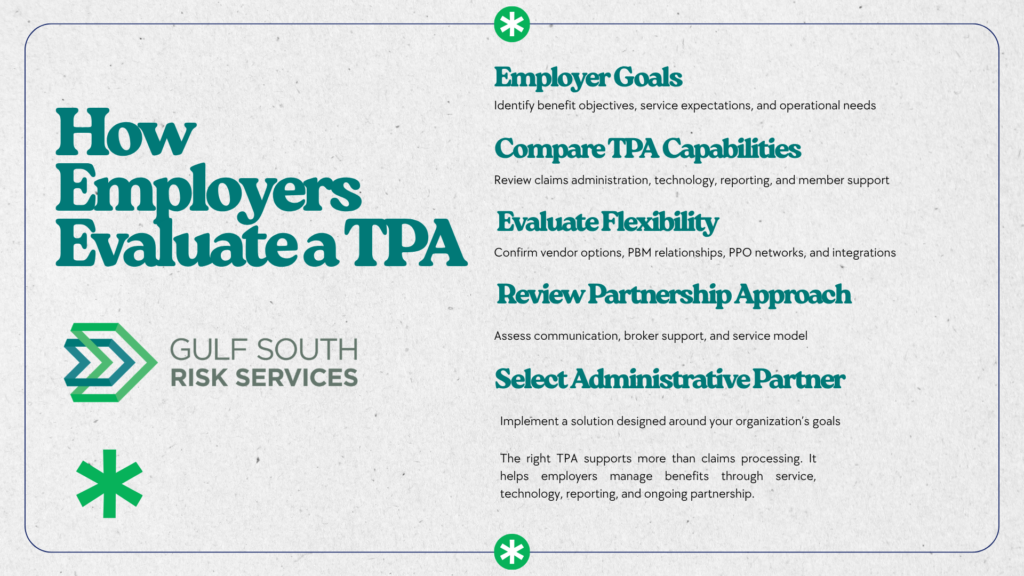
Final Checklist for Choosing the Right TPA
Before selecting a third-party administrator, employers and brokers can use this checklist to compare potential partners.
TPA Evaluation Checklist
☐ Understands your industry and workforce needs
☐ Provides experienced claims administration
☐ Offers responsive customer service
☐ Supports employee benefits administration
☐ Provides clear healthcare reporting
☐ Offers flexible vendor integration
☐ Can coordinate with your PBM and PPO network
☐ Understands stop-loss coordination
☐ Supports cost containment strategies
☐ Provides member support resources
☐ Has experienced claims professionals
☐ Supports broker partnerships
☐ Offers scalable technology solutions
☐ Provides transparent communication
☐ Aligns with your long-term goals
Employers should also consider scheduling discussions with potential administrators, reviewing implementation processes, and speaking with references when appropriate.
The right TPA should provide more than administrative services. It should support the ongoing management of employee benefits and help organizations make informed decisions about their programs.
A structured evaluation process helps employers select a TPA that aligns with their operational needs and long-term objectives.
Final Thoughts
Choosing the right third-party administrator is an important decision for employers and brokers managing employee benefits or workers’ compensation programs. The best TPA is not always the lowest-cost option but the partner that provides reliable claims administration, strong service, flexible technology, and effective communication.
Organizations should evaluate experience, reporting, vendor flexibility, member support, and long-term partnership potential before making a decision.
Gulf South Risk Services helps employers and brokers explore customized administration solutions designed around their specific needs. Contact Gulf South to discuss health plan administration, claims administration, workers’ compensation programs, and TPA services.
Frequently Asked Questions
How do I choose a third-party administrator?
Choosing a third-party administrator involves evaluating claims experience, customer service, technology, reporting, vendor flexibility, and industry knowledge. Employers should consider how well a TPA aligns with their benefits goals, workforce needs, and long-term administrative requirements.
What questions should I ask a TPA?
Employers should ask about claims handling, reporting capabilities, implementation processes, technology integrations, vendor relationships, and member support. Questions about PBM flexibility, PPO networks, and broker communication can also help determine whether a TPA is a good fit.
Should I choose an independent TPA?
An independent TPA may provide additional flexibility because it can often work with multiple vendors and solutions. Employers should evaluate whether an administrator’s approach, service model, and technology options align with their specific needs.
What services should a TPA provide?
TPA services may include claims administration, employee benefits administration, healthcare reporting, eligibility management, vendor coordination, member support, and cost containment support. Services vary by organization and plan structure.
How important is customer service when selecting a TPA?
Customer service is a key factor because employers, brokers, and employees rely on administrators for support throughout the plan year. Responsive communication can improve the overall administration experience.
Can I keep my current PBM?
Many TPAs can coordinate with existing pharmacy benefit managers, although options vary by administrator. Employers should discuss vendor flexibility during the evaluation process.
When should I switch TPAs?
Organizations may consider changing TPAs when they experience ongoing service issues, limited reporting, lack of flexibility, outdated technology, or a need for different administrative capabilities.