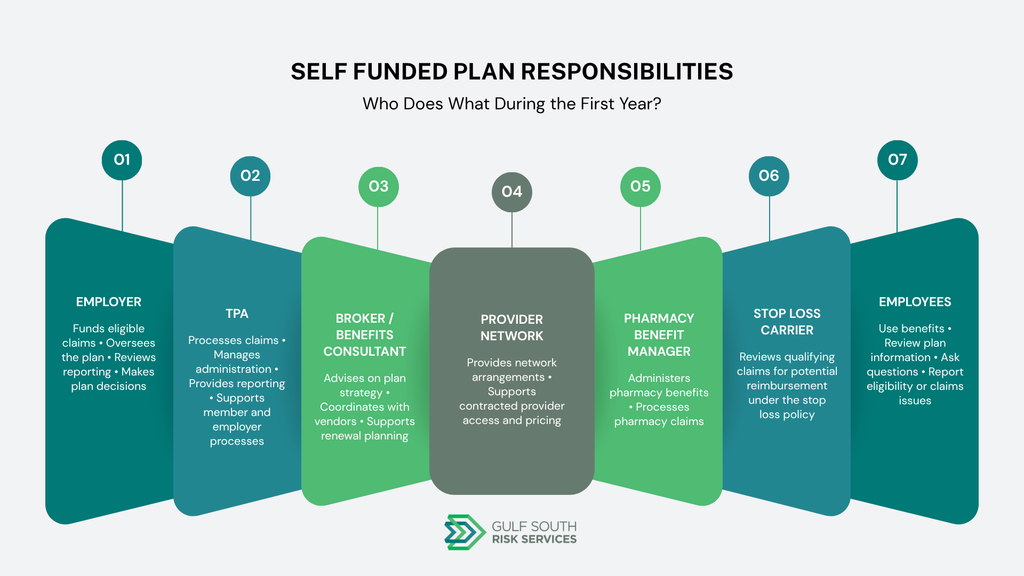
The first year of a self funded health plan is a structured cycle of implementation, claims administration, reporting, plan review, and renewal preparation. Employers often understand the funding concept but have less clarity about what happens after the decision is made. During the first year, the employer works with a third party administrator (TPA), broker or benefits consultant, stop loss carrier, provider network, and pharmacy benefit manager to operate the plan. Gulf South Risk Services helps organizations understand the administration and coordination involved.
Before the Plan Takes Effect
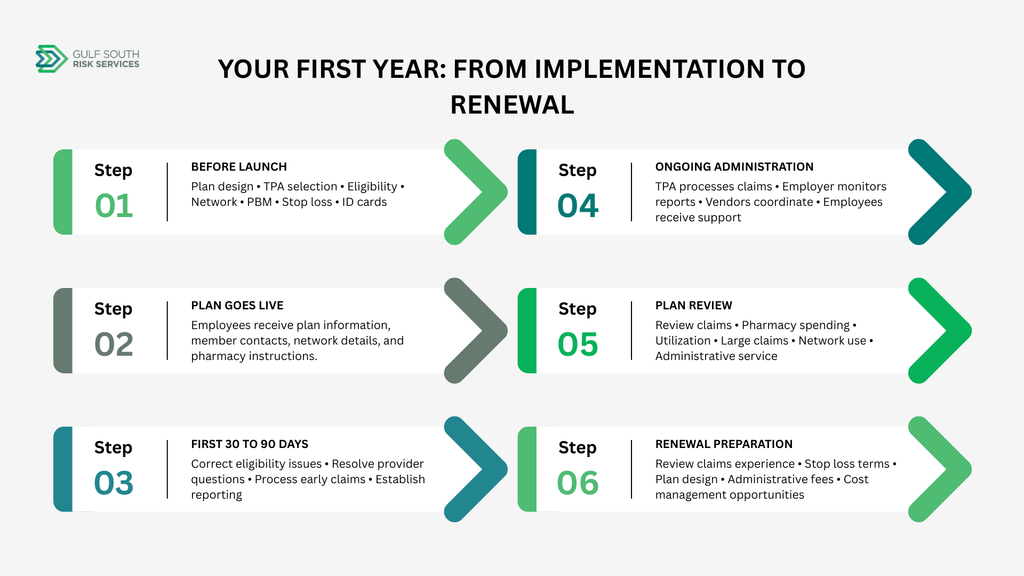
Self funded health plan implementation begins before the effective date. The employer, TPA, broker, and other vendors may need to complete several administrative steps before employees begin using the plan.
This work can include:
- Selecting or confirming the third party administrator
- Finalizing plan design and plan documents
- Confirming employee eligibility
- Coordinating the provider network
- Setting up pharmacy benefits
- Arranging stop loss insurance
- Preparing ID cards and enrollment materials
- Establishing employer funding and claims payment procedures
The exact responsibilities vary according to the self funded health plan structure and vendor arrangements. Gulf South Risk Services can help employers understand the administrative steps that need to be addressed before a self funded plan takes effect.
What Employees Experience During the Transition
Employees may experience changes to their plan information, contacts, networks, or pharmacy arrangements during the employee benefits transition. Depending on the plan, employees may receive new ID cards, updated enrollment materials, new claims or member service contacts, pharmacy instructions, and provider network information.
Clear communication is important when switching to self funded health insurance. Employees should know where to find information about eligibility, providers, prescriptions, claims, and questions about their benefits.
A practical approach is to give employees one central place for plan contacts and common questions. This can make it easier to understand who handles different issues.
The First 30 to 90 Days
The first 30 to 90 days usually focus on correcting enrollment information, resolving early questions, and establishing regular administration. Eligibility files may need corrections, while providers and employees may have questions about billing, claims, prescriptions, or network access.
During this period, the employer, broker, TPA, provider network, and pharmacy benefit manager may need to coordinate closely. Early reporting can also begin to show claims activity and administrative trends.
An early issue does not automatically indicate poor plan performance. Some issues are normal during implementation, particularly when eligibility data, vendor systems, or member information require correction.
Employers working with Gulf South Risk Services can ask questions about claims administration, reporting, and the responsibilities of each plan partner.
How Claims Administration Works
Self funded claims administration follows a defined process, with the TPA generally handling the day to day claims work rather than the employer.
- An employee receives eligible healthcare.
- The provider submits the claim.
- The TPA reviews the claim under the plan terms.
- Network discounts or other pricing arrangements are applied.
- The claim is approved, denied, or held for additional information.
- Payment is issued according to the funding arrangement.
- The employee receives an explanation of benefits.
The employer generally does not review individual medical decisions. Understanding the role of a third party administrator can help employers understand how claims are managed, while reviewing TPA versus insurance carrier information can clarify the different responsibilities involved.
Claims data may also support employee health plan cost containment discussions during the year.
What Employers Should Review During the Year
Employers should use health plan reporting to monitor claims activity, utilization, administration, and emerging trends throughout the year. Useful reports may include total claims, large claims, pharmacy spending, claim frequency, utilization patterns, network use, employee questions, administrative service levels, and stop loss reimbursements or notices when applicable.
Employers can use these reports to ask practical questions:
What is driving plan costs?
Look at claims categories, pharmacy spending, utilization, and other available information.
Are claims concentrated in one category?
A review of claims data can show whether spending is spread across the plan or concentrated in particular areas.
Are employees using the network as expected?
Network reporting may help identify patterns in provider use.
Are administrative issues being resolved?
Service questions and recurring problems can indicate areas where additional coordination is needed.
Reports should lead to informed questions rather than rushed conclusions. One expensive month does not necessarily define annual plan performance.
Preparing for the First Renewal
Self funded plan renewal preparation should use the first year’s claims experience and administrative information as a baseline. The employer and broker may review year to date claims, estimate remaining claims, evaluate stop loss renewal terms, review pharmacy performance, assess plan design, and consider administrative fees.
The review may also identify potential cost containment opportunities and areas where employee communication could be improved.
Self funding does not automatically reduce costs. The first year provides information that can help the employer, broker, and other advisors evaluate how the plan is performing and what changes may warrant further consideration.
Gulf South Risk Services can help employers review plan administration and prepare informed questions before renewal decisions are made.
Questions to Ask Gulf South Risk Services During the First Year
Employers can use these questions to understand their employer health plan administration:
- What reports should we receive and how often?
- Who should employees contact with claims questions?
- How are large claims monitored?
- What information will we need before renewal?
- Which responsibilities belong to the employer, TPA, broker, or other vendors?
Contact Gulf South Risk Services to discuss self funded health plan administration and what your organization should expect during its first year.
What Should Employers Expect From the First Year?
The first year of a self funded health plan is a cycle of implementation, administration, review, and planning. Claims activity and reporting provide information that can help employers understand plan performance, while coordination with the TPA and other vendors supports ongoing administration.
The first year also creates a foundation for future renewal discussions and plan decisions.
Quick Answer
During the first year of a self funded health plan, the employer works with a TPA and other plan partners to launch the plan, process claims, monitor costs, communicate with employees, review performance, and prepare for renewal. The employer funds eligible claims while the TPA manages much of the daily administration.